Chasing Constellations: Your Ultimate Sedona Stargazing Guide
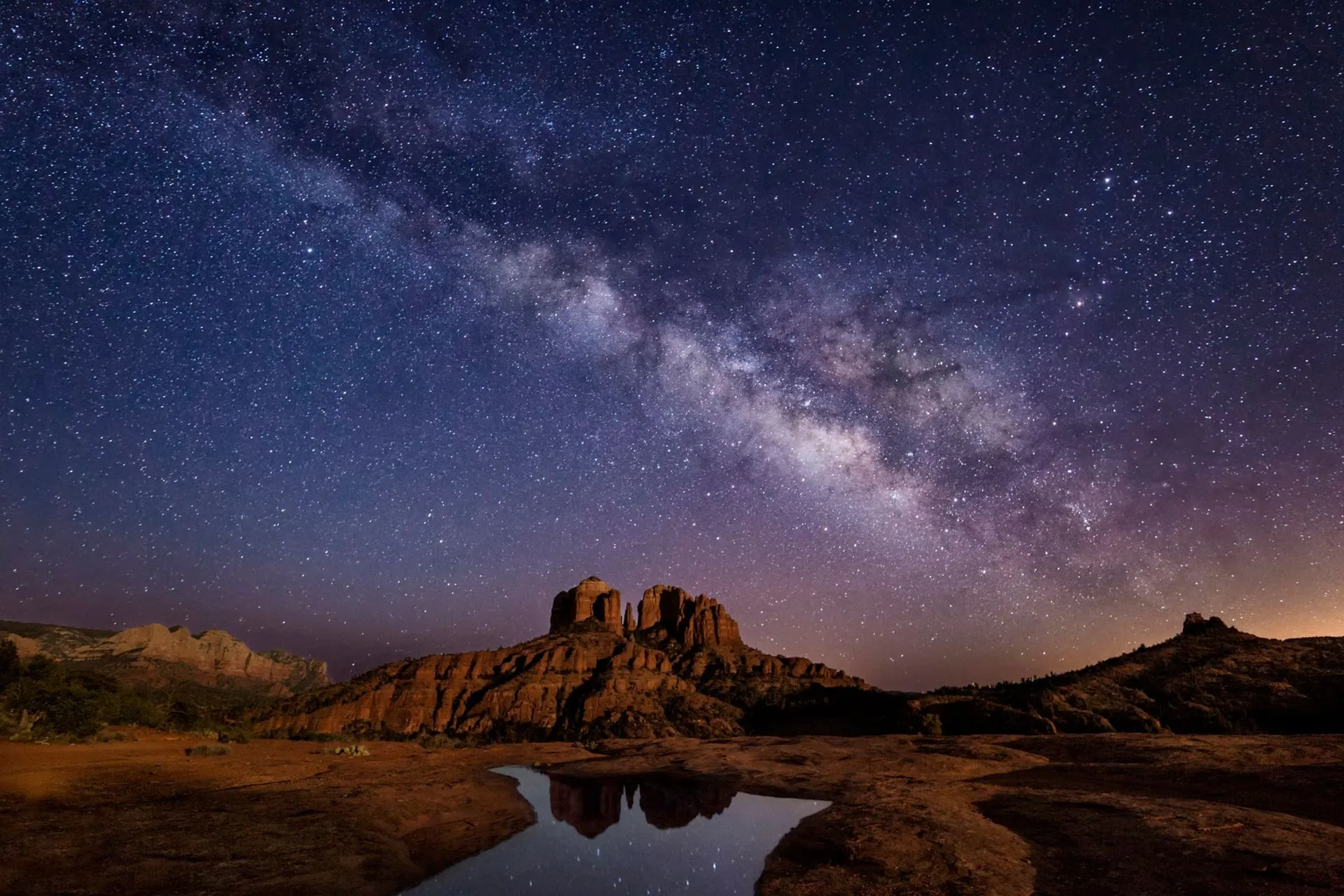
Sedona, Arizona is widely recognized as one of the best places in the world to explore the night sky. It is an official Dark Sky Community, meaning the city limits bright street lights so people can see stars, planets, and the Milky Way with perfect clarity. Here are our recommendations for making the most of your astrophotography and stargazing adventures in Sedona.
Top Spots for Stargazing in Sedona
Fay Canyon Trailhead
Located just 12 minutes away from the hotel, this flat, sandy 2.2-mile trail opens up into a wide canyon where you can spread out a blanket and look for shooting stars. It is especially popular for viewing major meteor showers.
Aerie Trailhead
Tucked away on the west side of Sedona along Boynton Pass Road, the paved parking lot here gets incredibly dark. It is a favorite spot for astrophotographers who want to capture the Milky Way arching over the sandstone cliffs.
Sedona Airport Scenic Lookout
If you want sweeping, panoramic views of the town illuminated by starlight without doing any night hiking, this roadside overlook is a great choice with easy car access.
Baldwin Trailhead
This is the ultimate “hero shot” location. The 1.6-mile loop trail provides a spectacular angle where the Milky Way arches directly over the massive spires of Cathedral Rock.
Guided Astronomy Experiences
If you prefer to explore the universe with a guide, local experts like Sedona Stargazing Tours offer incredible evening programs. Led by professional astronomers, these tours use massive state-of-the-art telescopes and high-powered lasers to point out deep-space galaxies, colorful nebulae, and nearby planets.
Pro Tips for Sedona Stargazing & Astro Photography
- Check the Moon Phase: The sky is darkest during a new moon, which is the prime time to view the Milky Way. It’s also the best time to schedule your photoshoot when the sky is at its absolute darkest.
- Preserve Your Vision: Use a flashlight or headlamp with a red-light mode. White light resets your eyes, making it harder to see faint stars. You’ll avoid ruining your natural night vision and accidentally exposing your camera shots.
- Pack Layers: The desert cools down quickly after the sun sets, even in the warmer months. Bring a jacket and a comfortable folding chair.
- Watch the Shadows: The red rocks absorb daylight and turn completely black at night unless illuminated by a sliver of moonlight. Plan your composition around silhouettes.
Bonus Activity: Moonlight Hikes
The Moonlight Hike is among the most popular interpretive hikes at Red Rock State Park. Led by a naturalist, it gives hikers the rare opportunity to enjoy the sunset and moonrise from an overlook and return by the light of the moon, while also having the chance to learn about Sedona and its surrounding areas. Verde Valley and park history, as well as archaeology, geology, botany, and riparian wildlife information, is also offered by a knowledgeable guide.
Your Basecamp for Adventure
If you are planning a trip to see these celestial wonders, staying at Mountain Modern Sedona, Tapestry Collection by Hilton provides the ideal adventure basecamp. The recently renovated property blends a trendy, lodge-like feel with the high-end comforts of a boutique hotel. Located right in West Sedona, the hotel makes it easy to explore the nearby red rocks during the day and chase shooting stars at night.
Start your mornings at The Den – our on-site restaurant offering handcrafted coffee drinks and bites to fuel your adventures. After returning in the evening, swap stories around the outdoor fire pits with a nightcap or relax your muscles in the heated outdoor pool and hot tub under the desert sky.